

On‑page SEO determines how well a blog post is understood by search engines and how relevant it appears to readers. Using an on‑page SEO checklist ensures that every published article has the structural elements and content quality needed to compete in search results. This article breaks down a complete sequence of tasks — from keyword placement and title tag optimization to mobile‑friendly design and structured data — that help blog posts perform better for organic traffic.
Whether you are a beginner or have some experience, this guide explains each item clearly and shows how to apply techniques step by step. The focus is on actionable steps that improve discoverability, relevance, and user experience while aligning with what search engines consider when evaluating pages.
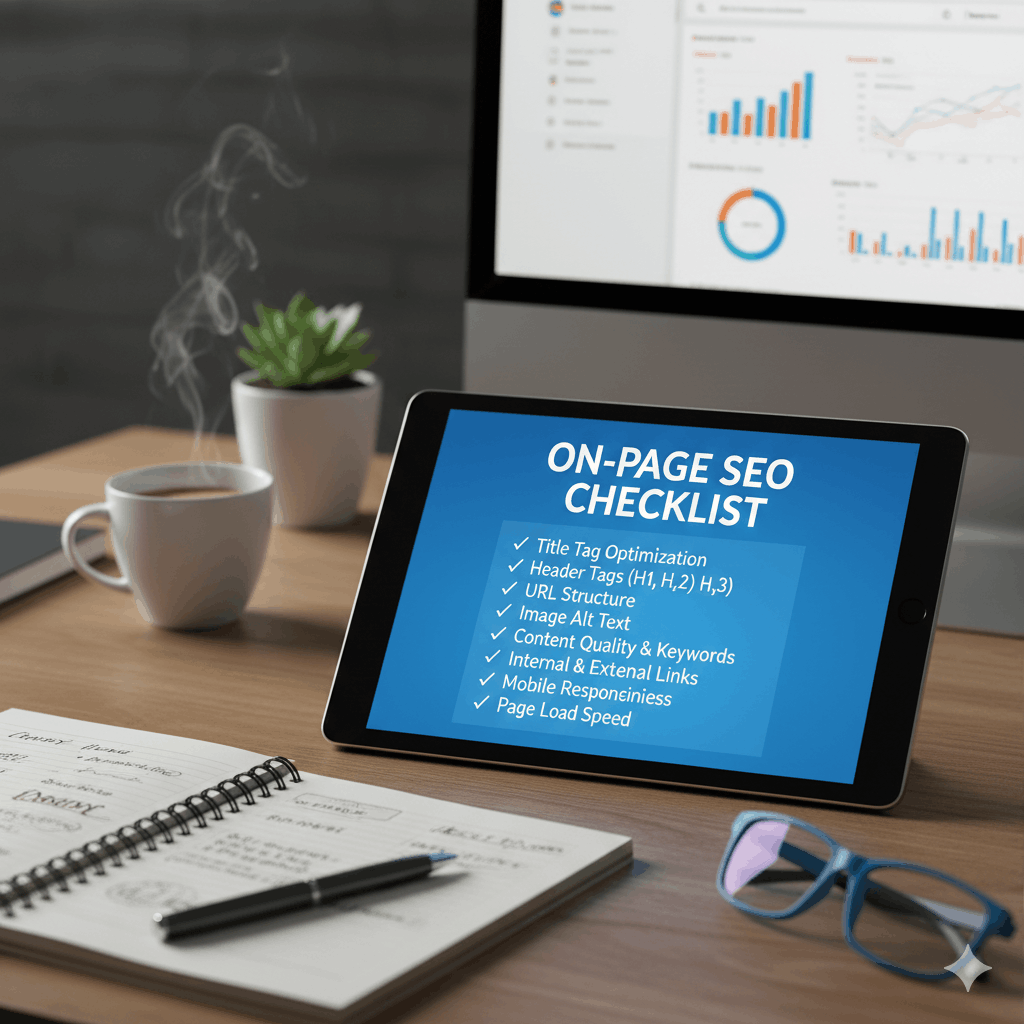
What On‑Page SEO Is and Why It Matters
On‑page SEO refers to the optimization of elements within a page or post to signal relevance and quality to search engines. It involves both content and HTML elements. When you follow an on‑page SEO checklist, you make sure each blog post is structured in a way that helps search engines recognize the topic, match it with relevant queries, and present it to readers.
This process is one of the most direct ways to influence how your posts rank. While external factors like backlinks matter, on‑page SEO defines whether a page is visible in search results for questions your audience enters.
Keyword Planning and Placement Checklist
Understanding Search Intent
Before writing, determine why people search for the topic. When someone types a phrase like on‑page SEO checklist for blogs or on‑page SEO for organic traffic, they are looking for specific steps they can follow. Matching that intent makes your content more relevant.
Selecting Target Keywords
Choose a target phrase that best reflects the topic of your post. Terms such as complete on‑page SEO checklist, on‑page SEO checklist 2026, or on‑page SEO checklist for WordPress can serve as primary targets depending on focus. Secondary keywords like on‑page SEO techniques support variations without repetition.
Placing Keywords Naturally
Incorporate the main phrase within the:
- Title tag
- First paragraph
- Main headings
- Subheadings
- Image alt text
- Meta description
Placement should feel natural and read smoothly, not forced.
SEO Title Tag Optimization
The title tag signals the main topic to both readers and algorithms. It should reflect the focus of your page clearly and match with user intent. For a post covering all aspects of optimizing content, a strong title tag uses the main keyword early.
Examples include:
- On‑Page SEO Checklist for Blog Posts
- Complete On‑Page SEO Optimization Checklist
A well‑written title also encourages higher click‑through rates in search results.
Meta Description Optimization
Meta descriptions are summaries that appear under the title in search results. They provide context and encourage clicks. While they do not directly influence ranking, a thoughtful meta description improves user engagement.
Write a concise summary that incorporates your target phrase and a sense of value, such as learning concrete tasks from a practical checklist.
URL Optimization for SEO
The URL slug should be concise and include the primary keyword. For example, a blog on optimizing content might use /on-page-seo-checklist-blog-posts/. Avoid long strings of numbers or irrelevant terms.
Good URLs make it easier for search engines and readers to recognize what the page covers before clicking.
Header Tag Optimization (H1, H2, H3)
Proper use of header tags helps structure content and supports readability.
- H1 is typically reserved for the main title.
- H2 elements divide major sections such as “Keyword Planning” or “Technical Checklist.”
- H3 and H4 tags handle subtopics within those sections.
Use relevant terms like keyword placement checklist, SEO content optimization, or internal linking checklist in headings to reinforce context without excess repetition.
Content Structure and Optimization
Crafting Useful Main Content
Your content should answer user questions directly and thoroughly. Each paragraph should push the topic forward. An on‑page SEO process includes understanding search queries and reflecting their intent within the flow of the text.
Good content satisfies readers and search systems by providing clarity and completeness.
Incorporating Secondary Terms
In addition to the main target, include supporting phrases such as on‑page SEO factors, on‑page SEO workflow, and on‑page SEO for Google rankings where they make sense. These terms signal thematic depth.
Keyword Usage and Semantic Signals
Search systems recognize not just exact matches but also related concepts. Using semantic synonyms and related modifiers improves relevance.
For example:
- keyword optimization on‑page SEO
- content on‑page SEO checklist
- semantic SEO checklist
These enrich the page’s topic clusters, making the content more likely to match varied search queries.
Internal Linking Checklist
Connecting new content to existing pages helps search systems navigate your site and distributes authority. Use descriptive anchor text such as “internal linking checklist” when referencing related posts.
Effective internal linking:
- Improves session duration
- Enhances context for search systems
- Encourages deeper exploration of your blog
External Linking Best Practices
Linking to authoritative and relevant pages provides context and supporting evidence for your statements. These should be used sparingly and only when they genuinely support a reader’s understanding.
Term usage such as external linking best practices helps contextualize why these links matter and how to use them.
Image SEO Optimization Checklist
Images enrich content and support readability, but they must be optimized.
Image Filename and Alt Text
Use descriptive filenames and alt text with clear phrases like image alt text optimization or on‑page SEO checklist visuals. Alt text helps search systems understand what an image represents.
File Size and Performance
Large images slow loading speed, which negatively impacts search visibility. Compress files while maintaining clarity to balance SEO and aesthetics.
Mobile‑Friendly SEO Checklist
Given the prominence of mobile searches, Google evaluates how pages render on handheld devices. A responsive design that adapts to different screen sizes is essential.
Terms such as mobile‑friendly SEO checklist and mobile‑first indexing SEO are strategic reminders that mobile readiness is part of modern optimization.
Page Speed and Core Web Vitals Optimization
Page load time directly affects user experience. Core Web Vitals measure aspects like loading performance, interactivity, and visual stability. Optimizing these elements is part of the on‑page SEO workflow.
Slow pages may cause higher bounce rates, lowering engagement signals even if content is relevant.
Schema Markup and Structured Data
Structured data helps search systems interpret content context. Implement schema types relevant to blogs, like article schema, so that your page is more likely to be displayed attractively in search results.
Consider terms such as schema markup on‑page SEO and structured data checklist when describing this technical step.
Readability and User Experience
Readable content engages visitors and increases the chance readers will stay longer. Factors that improve clarity include:
- Short paragraphs
- Clear subheadings
- Tables or lists where appropriate
- Smooth transitions
These elements support user experience on‑page SEO and correlate with better ranking. Search systems infer value from readability signals.
Content Length and Depth
Longer posts that cover a topic thoroughly often attract more engagement and links, and they may rank better for multiple related queries. When writing such content, ensure you maintain quality and relevance throughout.
Terms like SEO content length best practices and long form content for SEO highlight the value of substance over superficial text.
Topical Authority and Semantic SEO Signals
Topical authority arises when a blog hosts multiple related articles that support a comprehensive theme. Linking these pieces together and covering various facets — such as on‑page SEO techniques, on‑page SEO strategy, and on‑page SEO workflow — signals depth.
Semantic SEO emphasizes context and relatedness rather than simple repetition of single keywords.
Featured Snippet Optimization
Featured snippets provide short answers displayed at the top of search results. Structuring sections as clear questions and answers can increase the likelihood of earning a snippet.
For example:
- What qualifies as an on‑page SEO ranking factor?
- How do you optimize a meta description?
Providing concise, direct answers supports featured snippet optimization.
On‑Page SEO Audit Checklist
Before publishing or updating a post, run a final audit using a structured list.
Review:
- Keyword presence and placement
- Title and meta description clarity
- URL structure
- Header tags usage
- Internal and external links
- Image optimization
- Mobile friendliness
- Page speed metrics
- Schema markup
This approach ensures all components of comprehensive on‑page SEO checklist are covered.
Common On‑Page SEO Mistakes to Avoid
Even experienced writers slip up. Watch for:
- Keyword stuffing
- Ignoring mobile layout
- Missing alt text on images
- Thin or repetitive content
- Neglecting structured data
Regular audits help catch these issues before publishing.
On‑Page SEO Tools
A range of tools help evaluate and refine each step in the checklist:
- Tools for title and meta preview
- Image compression utilities
- Mobile responsiveness testing
- Page speed evaluation tools
- Structured data testing
Term mention such as on‑page SEO tools reminds readers that optimization is testable and measurable.
Professional On‑Page SEO Considerations
When managing sites at scale or offering services, a structured workflow helps standardize optimization. Whether you write for niche websites, WordPress, or broader audiences, documenting your procedure — from planning through audit — supports consistent quality.
Terms like on‑page SEO strategy and professional on‑page SEO optimization describe this structured approach.
Conclusion
Following a well‑organized on‑page SEO checklist ensures that your blog posts and web pages are structured in a way that search systems recognize and readers appreciate. From setting the right keyword focus and optimizing HTML elements to improving user experience and performance, each item contributes to how your content appears and performs in search.
When you treat on‑page SEO as a series of logical, repeatable steps, you give every blog post the best opportunity to rank, attract traffic, and engage audiences. Make this checklist part of your editorial workflow and adjust with evolving patterns in search expectations.
Frequently Asked Questions
What is an on‑page SEO checklist and why is it important?
It is a series of optimization tasks applied to blog posts so search systems understand their relevance and context, which influences rankings and visibility.
How often should I use this checklist?
Use it every time you publish or update a post.
Does page speed affect on‑page SEO?
Yes. Faster pages offer better experience and are favored by search systems.
Can on‑page SEO help featured snippets?
When content answers specific questions clearly and succinctly, it increases the chance of being featured.
Is content length important?
Appropriate depth helps cover search intent and supports visibility for a variety of related queries.


