

For anyone starting a website, blog, or online project, understanding search optimization is one of the most important steps toward generating real traffic. When visitors find your site through search results without paying for ads, that is organic visibility — the kind that sustains interest and builds relevance over time.
This guide covers SEO basics for beginners, presented clearly and without unnecessary jargon. It walks you through how search engines interpret content, how to match your pages with what users seek, and how to refine your content so it appears for relevant queries. Whether you are new to websites, blogging, or business presence online, this primer sets the stage for real, sustainable traffic from search.
By focusing on foundational principles and accessible techniques, you will gain confidence and clarity from the start. You will learn not only what to do but why it matters and how each piece of SEO fits together.
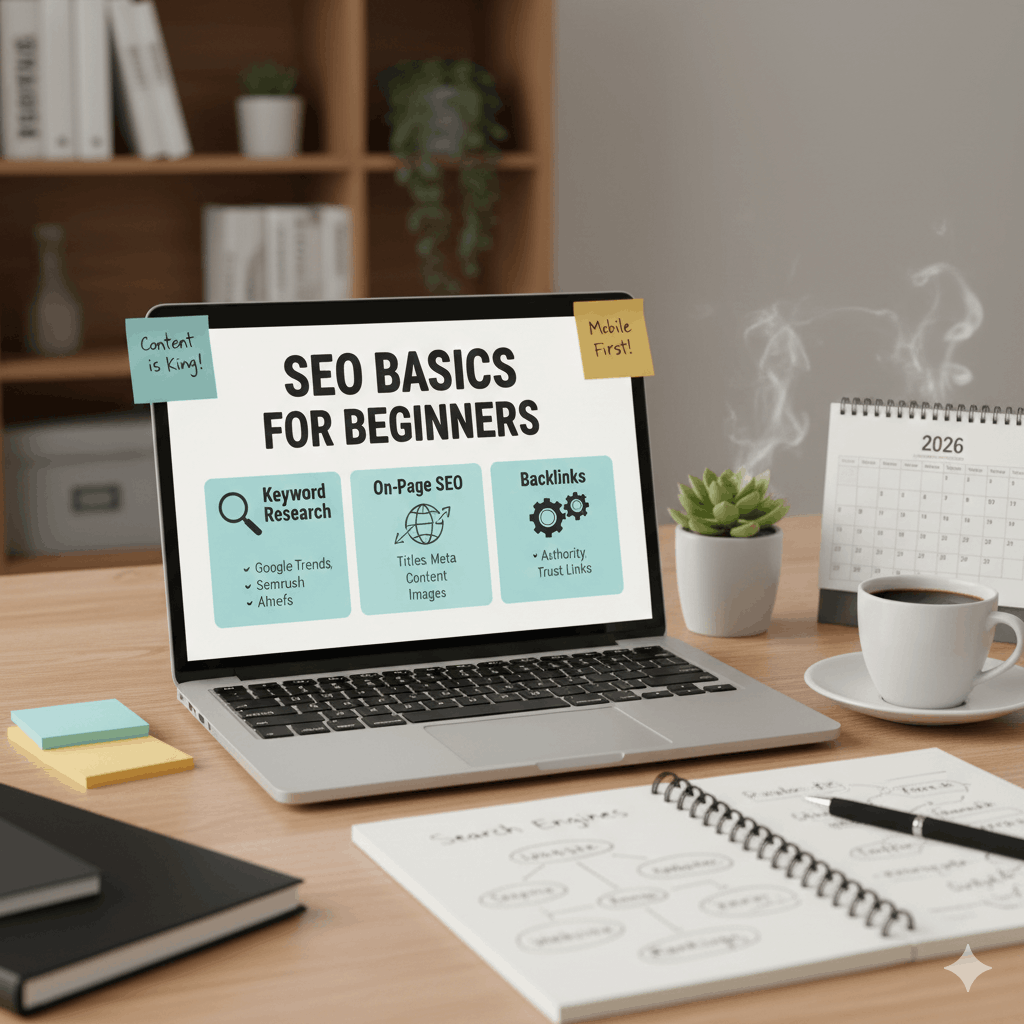
What SEO Means and Why It Matters
Search engine optimization refers to the methods used to help a web page appear higher in search engine results. When someone enters a query into search, the system tries to deliver the most relevant and helpful pages it can find. SEO helps search systems understand your content and what questions it answers.
For beginners, the relationship between content and visibility may seem mysterious. At its heart, SEO is about relevance and clarity. Pages that clearly address user inquiries, with thoughtful structure and content that satisfies the topic, are more likely to be shown.
Understanding search engines helps make sense of why certain pages appear first and others do not. When your content aligns with what users look for, and when structural signals like titles and headings reflect that alignment, your site becomes easier for both users and search systems to interpret.
How Search Systems Work
Before diving into techniques, it helps to understand how search systems find and present content. There are three basic activities happening behind the scenes:
Discovering Content
Search systems scan the web to find pages that exist. This process includes scanning text, identifying links, and copying content into their internal directories.
Understanding Content
After finding a page, the system analyzes what that content is about. It reads text, headings, and other signals to determine the topic and relevance.
Ranking Content
Once content is understood, it is compared with other pages that seem to answer similar queries. Factors such as relevance, clarity, and context influence where a page appears in results.
For beginners, the important takeaway is that search systems do not make random decisions. They rely on structure, wording, and context to match user queries with pages.
The Role of Keywords
Keywords are the terms users type when searching. Identifying what people search for helps you produce content that meets their expectations.
Why Keywords Still Matter
When you write a page that addresses a specific question, including the relevant terms — naturally and thoughtfully — clarifies alignment between a user’s query and your content. Beginners who grasp how to use keywords find it easier to create content that feels responsive rather than generic.
How to Find Terms People Actually Search For
Start by thinking about actual user language. What phrases would someone use when trying to learn something or solve a problem? This process gives you phrases that can be worked into titles, headings, and body text in a natural way.
For example, SEO basics for beginners becomes important when writing a foundational article. Other useful phrases early in your research might include how SEO works, keyword research basics, or SEO content writing tips.
Matching Intent
Not every phrase has the same purpose. Distinguish between:
- Queries where users want information (like “SEO explained simply”)
- Queries where users look for tools or comparisons
- Queries where readers want tactical steps
This helps ensure your content answers not just one keyword but the underlying expectation behind it.
On‑Page Optimization Fundamentals
On‑page optimization refers to adjustments made within the content and code of your own pages to communicate clearly with search systems and readers.
Titles and Headings
Titles convey what a page is about in a concise phrase. Include meaningful terms like SEO basics for beginners in your titles so both users and search systems understand relevance immediately.
Headings support structure. They break content into understandable parts that guide both the reader and the search system.
Meta Tags and Descriptions
Meta text provides short summaries associated with a page. A consistent approach to describing your page content helps systems display more accurate snippets in results. While not a direct ranking decision, well‑written explanations improve the chances that users choose your result.
URL Structure
Simple, clear URLs that reflect a page’s topic — such as including a descriptive phrase related to the content — make it easier for search systems and humans to interpret what the page covers.
Content Optimization
Writing quality content that naturally incorporates relevant phrases such as SEO basics for websites or SEO for beginners guide communicates topic focus without repetitive language patterns. This type of content respects both search systems and human readers.
Keyword Research: The Foundation of Content Planning
Keyword research helps you identify what users care about and how often they seek answers. For beginners, this process begins with listing phrases users might use, then refining those into topics that feel natural to address.
Core Search Terms
Start with clear, topic‑related phrases:
- SEO basics
- SEO basics for small businesses
- search intent in SEO
- keyword research basics
These phrases reflect what users might type when they want introductory explanations.
Choosing the Right Opportunities
Evaluate terms by considering:
- How directly they connect to what you can write about
- Whether the search intent matches information you’ll cover
- How specific the query is versus how broad
Broad queries may reflect general interest but can be harder to satisfy fully. More specific phrases like on‑page SEO basics or technical SEO basics give you clearer focus.
A Simple Tutorial for Beginners
A tutorial format helps beginners follow a logical progression. Begin with orientation — defining what SEO is — then gradually move into actionable skill areas.
Step‑by‑Step Overview
Introduce concepts in an order that builds understanding:
- What SEO means
- How search systems interpret content
- Finding terms people search for
- Writing content that matches queries
- On‑page and off‑page considerations
- Tracking performance
This incremental approach helps beginners connect ideas and apply them as they learn.
Common Mistakes Beginners Make
Understanding what to avoid can accelerate learning.
Overlooking Intent
Focusing solely on keywords without thinking about why someone searches for them leads to shallow content that doesn’t satisfy readers.
Ignoring Structure
Pages without clear headings, logical flow, or descriptive summaries make it harder for search systems to recognize relevance.
Forgetting Technical Signals
Search systems look for evidence that a site is reliable and accessible. Pages that load slowly or lack clear navigation signals may be de‑prioritized.
Recognizing these issues early helps you avoid rewriting later and supports long‑term traffic gains.
Content That Serves Both Readers and Search Systems
SEO for beginners succeeds when content focuses on providing value. Write with the reader’s question in mind:
- What does the user want at this moment?
- How can the explanation be clear and complete?
- What supporting examples clarify the point?
Content that reads naturally while also incorporating relevant phrases such as SEO basics explained with examples and SEO fundamentals earns trust from both audiences.
Readiness for More Advanced Techniques
Once the foundation is clear, you can build on it with intermediate topics such as site speed, mobile performance, or link formation. Organic visibility often comes from a combination of clarity in writing and ongoing refinement.
On-Page SEO: Structuring Content for Maximum Clarity
On-page SEO involves everything you can control on your own pages to make them readable for both humans and search systems. For beginners, mastering this ensures content is organized, relevant, and visible.
Headings and Subheadings
Using headings like H2 and H3 organizes content into digestible sections. For example, when explaining SEO basics for bloggers or SEO basics for new websites, headings allow readers to quickly locate information. Headings should reflect natural queries your audience might have.
Internal Linking
Internal links connect pages within your site. For instance, linking SEO basics for small businesses to on-page SEO basics helps distribute relevance and keeps readers engaged longer. It also allows search systems to better understand your content structure.
Meta Tags
Meta titles and descriptions should summarize the content accurately. Including terms like SEO for beginners guide or SEO basics step by step helps match pages with relevant searches, improving click-through rates without keyword stuffing.
Content Formatting
Break up content with bullet points, short paragraphs, and relevant examples. For instance, when discussing content optimization basics, use small sections to explain strategies like keyword placement, LSI keyword integration, and semantic SEO for blogs.
Technical SEO for Beginners
Technical SEO ensures that search systems can crawl and understand your site efficiently. Beginners can improve performance without advanced coding knowledge.
Site Speed
Pages that load quickly provide a better experience for users and are favored by search engines. Optimizing images, using caching, and selecting fast hosting can significantly improve speed.
Mobile Optimization
With mobile-first indexing, ensuring your site displays well on phones and tablets is critical. Responsive design and touch-friendly navigation help both users and SEO performance.
URL Structure
Clean URLs that reflect the page topic improve readability and ranking. For example, yourblog.com/seo-basics-for-beginners clearly communicates the page topic.
Schema Markup Basics
Even a simple implementation of schema helps search systems understand page content. For beginners, focus on basic article or blog markup to improve appearance in search results.
Keyword Research for Beginners
Effective SEO starts with knowing which words and phrases your audience searches for.
Finding Low Competition Keywords
Tools like Google Search Console or free keyword planners can identify queries with less competition. Phrases like SEO basics for WordPress or how to do keyword research often have good beginner-friendly potential.
Understanding Search Intent
Different keywords serve different purposes. Informational queries like SEO tutorial for beginners indicate that the user wants guidance. Commercial or transactional queries, such as SEO plugins for beginners, may indicate an interest in specific products or services.
Content Clustering and Topical Authority
Group related content around a core topic. For example, a main article on SEO basics for beginners can link to supporting pages about on-page SEO basics, technical SEO basics, and keyword research basics. This approach helps establish topical authority and improves overall organic traffic.
Writing SEO-Friendly Content
Content should be clear, informative, and optimized without being unnatural.
Long-Form Content
Long-form articles, such as 3,000+ word guides, provide depth and allow natural integration of multiple keywords. For example, you can include SEO checklist for beginners, meta tags basics, and title tag optimization in context without forced repetition.
LSI and Semantic Keywords
Use related terms and synonyms naturally. Terms like SEO fundamentals, learn SEO from scratch, and SEO explained simply reinforce the main topic while avoiding redundancy.
Evergreen Content
Focus on creating content that remains relevant over time. For instance, a tutorial on SEO basics for small businesses remains useful even as minor updates occur, reducing the need for constant rewriting.
Internal Linking Strategy
Link new articles to existing pages when relevant. For example, a post on SEO for beginners guide can link to older content on how to optimize a website for SEO or SEO tools for beginners, reinforcing authority and user engagement.
Off-Page SEO Basics
Off-page SEO focuses on external factors that influence your ranking.
Backlinks and White Hat Link Building
Obtaining links from relevant, trustworthy sites signals value to search systems. Beginners can start with guest posting or collaborating with bloggers in related niches.
Social Signals
While not a direct ranking factor, social sharing increases visibility and potential for backlinks. Sharing posts about SEO content writing tips or technical SEO basics on social media can indirectly boost traffic.
Organic Promotion Methods
Content promotion without ads can include sharing through email newsletters, niche communities, and forums. For example, sending guides like SEO basics for bloggers to your email list encourages sharing and engagement.
Tracking and Measuring SEO Performance
Monitoring your site’s performance helps beginners understand what works and what needs improvement.
Google Analytics and Search Console
Track traffic, user behavior, and keyword performance. For instance, you can see which posts about SEO tutorial for beginners attract the most clicks.
Metrics to Watch
Focus on organic traffic, average session duration, and bounce rate. High dwell time on SEO basics explained with examples indicates that content is engaging and relevant.
Continuous Improvement
Periodically review older content to update information, improve structure, or refresh keywords. For example, revising SEO basics 2026 to include current insights ensures ongoing relevance.
FAQs
What is the best way to start learning SEO?
Begin with a structured guide covering on-page, off-page, and technical SEO. Focus on practical examples and implement changes as you learn.
How long does it take to see results from SEO?
Results vary, but most beginners start seeing measurable organic traffic improvements within 3–6 months when consistently applying SEO principles.
Do I need to pay for SEO tools?
No. Free tools like Google Search Console, Google Analytics, and basic keyword planners provide valuable insights for beginners.
Can I rank a new website quickly?
Ranking a new site takes time. Focus on producing high-quality, targeted content and gradually building backlinks to improve visibility.


